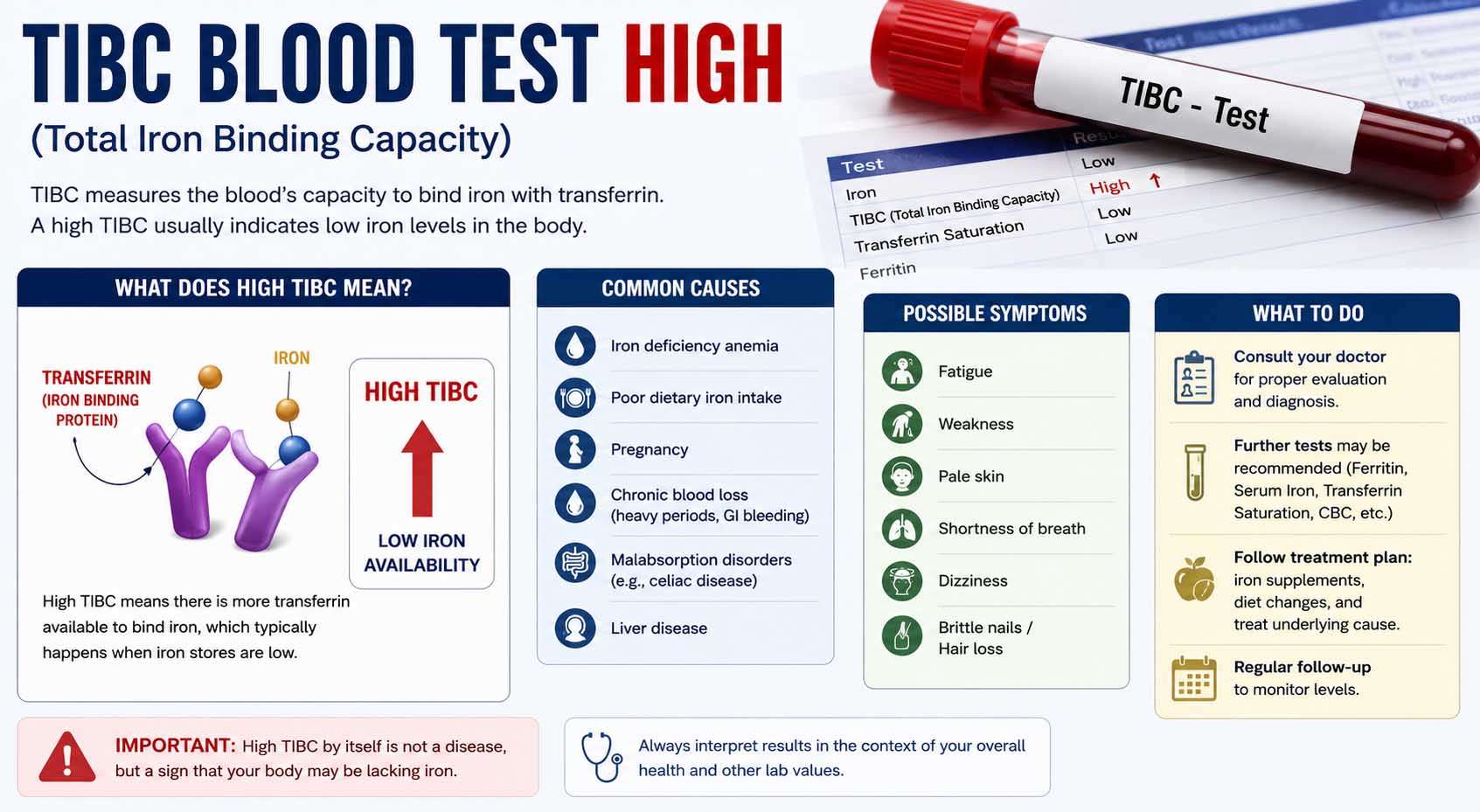
A TIBC blood test high result often suggests that your body has low iron stores or increased iron-binding capacity. TIBC stands for Total Iron Binding Capacity. This test measures how much iron your blood can potentially carry through a protein called transferrin. Doctors use it to investigate iron deficiency, anemia, and other conditions that affect iron balance.
However, high TIBC does not automatically mean you have a serious medical condition. Your doctor must consider your symptoms, medical history, and other laboratory findings. For example, high TIBC combined with low ferritin and low serum iron often suggests iron deficiency.
Understanding these results can help you recognize possible causes and discuss appropriate treatment with your healthcare professional.
TIBC Blood Test High: What Does It Mean?
A high TIBC result means your blood has a greater-than-expected capacity to bind iron. In many cases, this happens because the liver produces more transferrin when iron availability decreases.
Transferrin transports iron through the bloodstream. When iron stores decline, the body may increase transferrin production to capture available iron more efficiently. As a result, TIBC can rise even while serum iron levels fall.
However, an elevated result does not establish a diagnosis. Pregnancy, hormonal changes, and certain medications may also influence iron-binding capacity.
Therefore, doctors interpret TIBC alongside other iron studies rather than relying on a single measurement.
How TIBC Measures Iron Transport
The test estimates the total amount of iron that transferrin can bind in your blood.
Iron plays an essential role in producing hemoglobin, the protein that allows red blood cells to transport oxygen.
When the body lacks sufficient iron, hemoglobin production may decrease. Over time, this can contribute to iron deficiency anemia.
Meanwhile, increased transferrin levels may cause TIBC to rise. This relationship explains why doctors frequently request several iron-related measurements together.
TIBC Blood Test High: Normal Range and Results
A commonly cited adult reference range for TIBC is approximately 250–450 micrograms per deciliter (mcg/dL).
However, laboratories may use different methods and reference intervals. Therefore, the normal range printed on your laboratory report should guide interpretation.
| TIBC result | Possible meaning |
|---|---|
| Within the reference range | Iron-binding capacity falls within the laboratory’s expected interval |
| Above the reference range | May suggest iron deficiency or increased transferrin |
| Below the reference range | May occur with inflammation, liver disease, or reduced transferrin production |
Importantly, these patterns do not confirm a diagnosis.
For reliable information about this test, consult the MedlinePlus Total Iron Binding Capacity (TIBC) test guide.
TIBC Blood Test High: Common Causes
Several conditions can increase the blood’s iron-binding capacity. However, iron deficiency remains one of the most common explanations.
High TIBC Due to Iron Deficiency
Iron deficiency develops when the body loses more iron than it receives or absorbs.
For example, insufficient dietary intake, ongoing blood loss, or poor absorption can gradually reduce iron stores.
As iron availability decreases, transferrin levels may rise. Consequently, TIBC can increase.
Doctors often look for low ferritin and low transferrin saturation to support an iron deficiency diagnosis.
Iron Deficiency Anemia and Elevated TIBC
Iron deficiency anemia occurs when insufficient iron affects the body’s ability to produce adequate hemoglobin.
Common symptoms include fatigue, weakness, dizziness, and reduced exercise tolerance.
However, early iron deficiency may develop before anemia appears on a complete blood count.
Therefore, doctors sometimes identify low iron stores even when hemoglobin remains within the normal range.
High TIBC Caused by Blood Loss
Ongoing blood loss can gradually deplete iron reserves.
Possible causes include:
- Heavy menstrual periods
- Gastrointestinal bleeding
- Stomach or intestinal ulcers
- Certain digestive tract conditions
- Repeated blood donation
- Blood loss following surgery or injury
In particular, unexplained iron deficiency in adults may require an evaluation for gastrointestinal blood loss.
Black tarry stools, fainting, or significant weakness warrant prompt medical attention.
Pregnancy and Increased Iron-Binding Capacity
Pregnancy increases the body’s need for iron. Additionally, pregnancy-related changes can raise transferrin and TIBC levels.
However, an elevated result during pregnancy does not automatically indicate iron deficiency.
Doctors consider hemoglobin, ferritin, pregnancy stage, and other findings before recommending treatment.
Poor Iron Absorption and Digestive Disorders
Some digestive conditions interfere with the body’s ability to absorb iron.
For example, celiac disease and certain inflammatory bowel conditions can contribute to iron deficiency.
Previous gastrointestinal surgery may also affect absorption.
Therefore, persistent low iron levels despite adequate dietary intake may require further investigation.
Medications and Hormonal Changes
Estrogen-containing medications and hormonal changes can influence transferrin concentrations.
As a result, some people may have elevated TIBC without the typical laboratory pattern of iron deficiency.
Always tell your healthcare professional about medications, supplements, and relevant medical conditions when discussing abnormal results.
TIBC Blood Test High: Symptoms and Warning Signs
High TIBC itself generally does not cause symptoms. Instead, symptoms usually arise from the underlying condition, particularly iron deficiency.
Common symptoms may include:
- Persistent tiredness
- General weakness
- Dizziness or lightheadedness
- Headaches
- Pale skin
- Shortness of breath during physical activity
- Reduced exercise tolerance
- Difficulty concentrating
Some people with iron deficiency also experience restless legs, brittle nails, or unusual cravings for nonfood substances.
However, these symptoms can have many causes. Therefore, laboratory testing and clinical evaluation remain essential.
Can Elevated TIBC Cause Fatigue?
An elevated TIBC value does not directly cause fatigue.
Instead, low iron stores or iron deficiency anemia may affect normal oxygen transport and energy-related functions.
Consequently, people may feel tired or weak during everyday activities.
If fatigue persists, a healthcare professional may investigate iron status alongside other possible causes.
TIBC Blood Test High: Ferritin and Serum Iron Results
Doctors rarely interpret TIBC alone because several tests provide a more complete picture of iron metabolism.
The most useful measurements often include serum iron, ferritin, transferrin saturation, and a complete blood count.
High TIBC Blood Test and Low Ferritin
Ferritin reflects the body’s stored iron, although inflammation and other conditions can affect its concentration.
When ferritin is low and TIBC is high, the combination commonly supports iron deficiency.
However, your doctor must still determine why iron stores have declined.
Possible explanations include dietary insufficiency, blood loss, and impaired absorption.
High TIBC Blood Test and Low Serum Iron
Serum iron measures the amount of circulating iron associated with transferrin.
Low serum iron combined with elevated TIBC can suggest iron deficiency.
Nevertheless, serum iron fluctuates and may change with recent intake or other physiological factors.
Therefore, doctors usually assess it alongside ferritin and transferrin saturation.
Transferrin Saturation in High TIBC Results
Transferrin saturation estimates the percentage of available iron-binding sites occupied by iron.
Laboratories commonly calculate it using the following formula:
Transferrin saturation (%) = (Serum iron ÷ TIBC) × 100
Both measurements must use compatible units.
For example, if serum iron is 40 mcg/dL and TIBC is 400 mcg/dL, transferrin saturation equals 10%.
A low percentage may support iron deficiency, although interpretation depends on the laboratory range and clinical circumstances.
Understanding Related Blood Test Results
Other laboratory measurements may help doctors investigate symptoms or identify related conditions.
For example, an mpv blood test high result concerns platelet size rather than iron-binding capacity. Doctors interpret these findings according to their different clinical purposes.
Similarly, liver-related laboratory abnormalities may require separate evaluation. Patients reviewing such results may find it helpful to understand what level of AST is dangerous.
However, neither MPV nor AST replaces dedicated iron studies.
High vs. Low TIBC Blood Test Results
High and low TIBC values can indicate different changes in iron metabolism.
| Feature | High TIBC | Low TIBC |
|---|---|---|
| Iron-binding capacity | Increased | Decreased |
| Common association | Iron deficiency | Inflammation or reduced transferrin production |
| Transferrin levels | Often increased | Often decreased |
| Serum iron | Frequently low in iron deficiency | May be low or vary by cause |
| Interpretation | Requires additional iron studies | Requires additional iron studies |
For example, iron deficiency anemia often produces elevated TIBC.
In contrast, anemia associated with chronic inflammation may produce normal or reduced TIBC.
However, overlapping medical conditions can create mixed laboratory patterns. Therefore, doctors consider the complete clinical picture.
TIBC Blood Test High: Diagnosis and Additional Tests
An elevated result usually prompts further evaluation rather than immediate treatment.
First, a healthcare professional reviews symptoms, medications, dietary habits, and relevant medical history.
Next, additional blood tests may help identify the underlying cause.
Additional Blood Tests for High TIBC
Doctors may request:
- Serum ferritin: Helps assess stored iron.
- Serum iron: Measures circulating iron.
- Transferrin saturation: Estimates how much transferrin carries iron.
- Complete blood count: Evaluates hemoglobin and red blood cell characteristics.
- Reticulocyte measurements: May provide information about red blood cell production.
- Additional tests: May help investigate inflammation or other suspected conditions.
Depending on the findings, doctors may also evaluate possible blood loss or digestive disorders.
When High TIBC Requires Further Investigation
Further testing may be appropriate when iron deficiency has no obvious explanation.
For example, adults with unexplained iron deficiency anemia may need an assessment for gastrointestinal bleeding.
Similarly, persistent abnormalities despite treatment can indicate an ongoing source of blood loss, poor absorption, or another condition.
Therefore, identifying the cause matters as much as correcting the laboratory values.
TIBC Blood Test High: Treatment Options
Treatment focuses on the underlying cause rather than the TIBC number itself.
If tests confirm iron deficiency, a doctor may recommend dietary changes, iron supplementation, or treatment for blood loss.
However, taking iron without confirming a deficiency can be inappropriate and potentially harmful.
Iron-Rich Foods for Low Iron Levels
Dietary iron comes from animal and plant sources.
Examples include:
- Lean meat
- Fish and poultry
- Beans and lentils
- Tofu
- Iron-fortified cereals
- Dark leafy vegetables
- Certain nuts and seeds
Animal foods contain heme iron, which the body generally absorbs more efficiently than non-heme iron from plant sources.
However, plant foods can still make an important contribution to daily iron intake.
Improving Iron Absorption Naturally
Vitamin C can help the body absorb non-heme iron from plant-based meals.
For example, eating lentils with tomatoes or adding citrus fruit to a meal may support absorption.
Meanwhile, tea and coffee consumed with meals can reduce non-heme iron absorption.
Therefore, people with confirmed iron deficiency may benefit from discussing meal timing and dietary choices with a healthcare professional.
Dietary recommendations should also account for other medical conditions. For example, patients who must restrict potassium may need individualized guidance when choosing foods discussed in high potassium foods to avoid.
Iron Supplements for Confirmed Deficiency
Doctors may recommend oral iron supplements when laboratory findings confirm iron deficiency.
The appropriate dose and schedule depend on the person’s age, medical history, laboratory results, and ability to tolerate treatment.
Some supplements cause constipation, nausea, or abdominal discomfort.
Therefore, patients should follow professional guidance rather than selecting high doses independently.
In certain circumstances, clinicians may consider intravenous iron when oral treatment is unsuitable or ineffective.
Treating the Underlying Cause
Iron supplementation alone may not solve the problem if blood loss or poor absorption continues.
For example, treatment may involve managing heavy menstrual bleeding, investigating gastrointestinal symptoms, or addressing a digestive disorder.
Consequently, follow-up care helps reduce the risk of recurring iron deficiency.
Preventing Elevated TIBC and Iron Deficiency
Not every cause of elevated TIBC is preventable. However, healthy dietary habits and timely medical evaluation can reduce the risk of some forms of iron deficiency.
Helpful steps include:
- Eat a balanced diet containing suitable iron sources.
- Include vitamin C-rich foods with plant-based meals.
- Discuss persistent fatigue or unusual weakness with a doctor.
- Seek evaluation for heavy menstrual bleeding or possible gastrointestinal blood loss.
- Follow recommended testing during pregnancy.
- Avoid taking high-dose iron supplements without medical advice.
Additionally, people with a history of iron deficiency may need periodic monitoring according to their clinician’s recommendations.
When to See a Doctor About High TIBC
Contact a healthcare professional if you receive a TIBC blood test high result, especially when you also have low ferritin, abnormal hemoglobin, or persistent symptoms.
You should also seek medical evaluation for unexplained weight loss, ongoing digestive symptoms, or repeated iron deficiency.
Seek urgent medical attention for severe shortness of breath, chest pain, fainting, or signs of significant gastrointestinal bleeding.
Although many causes of elevated TIBC are treatable, timely diagnosis helps identify conditions that require further care.
TIBC Blood Test High: Frequently Asked Questions
Is a High TIBC Blood Test Dangerous?
A high result is not necessarily dangerous by itself. However, it may indicate iron deficiency or another condition that requires medical evaluation.
The level of concern depends on your symptoms and additional test results.
Does High TIBC Always Mean Iron Deficiency?
No. Iron deficiency is a common cause, but pregnancy, estrogen-related changes, and other factors may also influence TIBC.
Therefore, doctors assess additional laboratory measurements before making a diagnosis.
What Happens if TIBC Is High but Ferritin Is Normal?
This combination may have several explanations.
For example, hormonal factors or early changes in iron balance may influence results. Additionally, ferritin can rise during inflammation, potentially complicating interpretation.
A healthcare professional can review the complete laboratory pattern.
Can High TIBC Return to Normal?
Yes. If iron deficiency causes the elevated result, appropriate treatment may improve iron stores and gradually normalize iron-related measurements.
However, the response depends on the underlying cause and the effectiveness of treatment.
Should I Take Iron Supplements for High TIBC?
Do not start iron supplements solely because TIBC is elevated.
First, discuss your ferritin, serum iron, transferrin saturation, and complete blood count with a healthcare professional.
This helps determine whether supplementation is necessary.
Conclusion: Understanding Your High TIBC Results
A TIBC blood test high result commonly indicates increased iron-binding capacity and may suggest iron deficiency. However, TIBC alone cannot confirm anemia or identify the underlying cause.
Doctors interpret elevated TIBC alongside ferritin, serum iron, transferrin saturation, and other relevant findings.
If your results are abnormal, discuss them with a healthcare professional before starting supplements. Understanding the complete iron profile can help guide appropriate treatment and follow-up care.